The Magnolia Company’s Legacy Trees
April 2nd, 2026
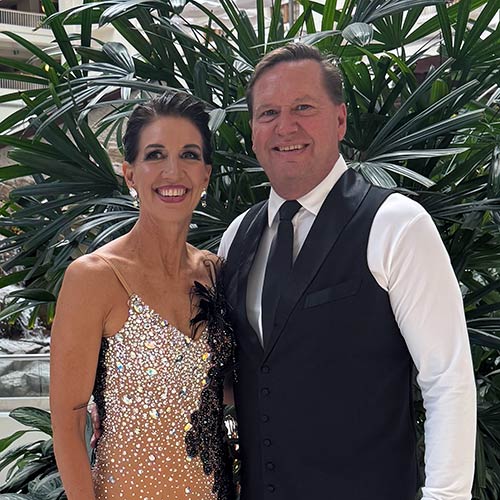
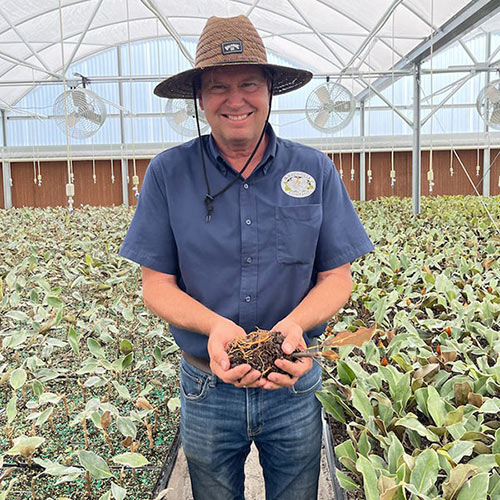
A Conversation with Cofounder Matt Roth
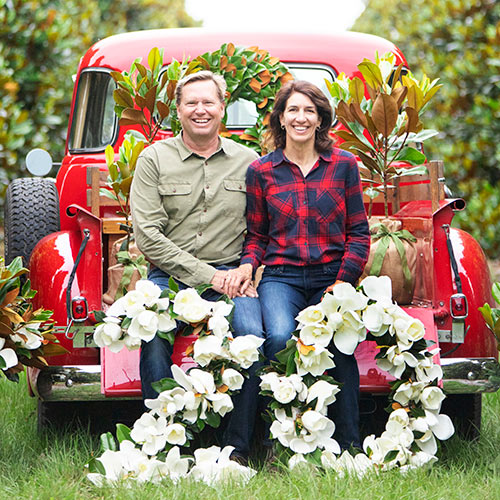
The Magnolia Company: Meet Matt
The Magnolia Company has roots that run far deeper than just “agribusiness.”
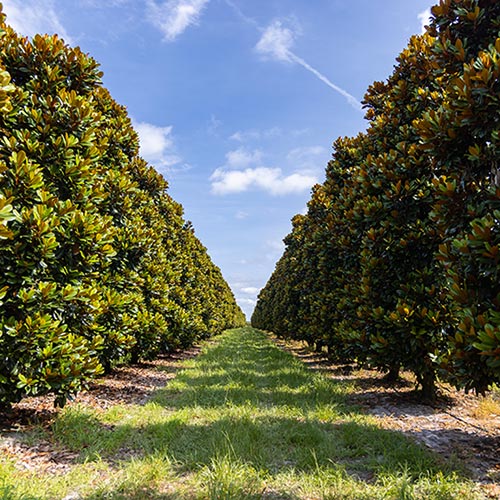
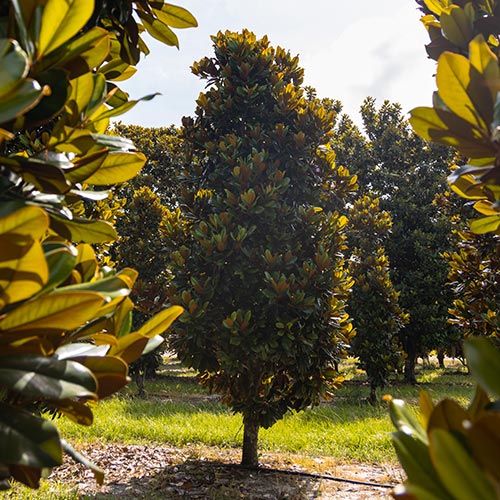
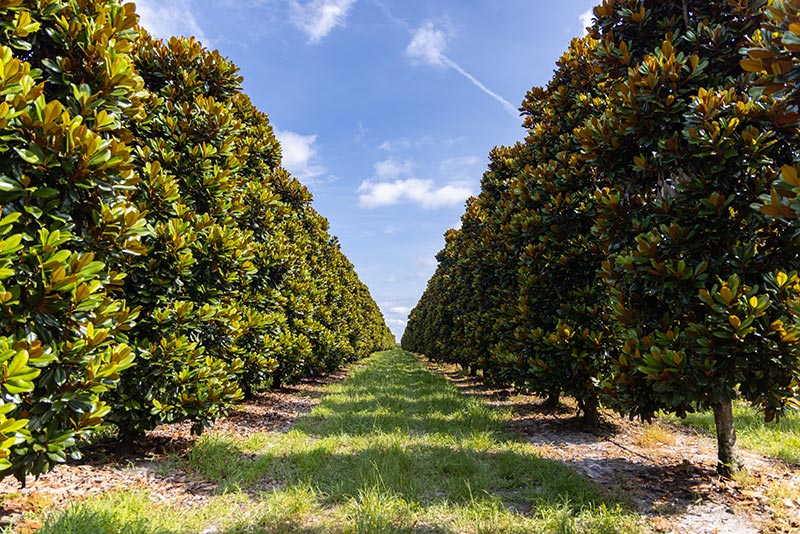
In fact, it started out as Underhill Farms – a small (very small) family business that specialized in ferns. With time and care, that business grew into a gorgeous grove of incredible magnolia cultivars in Barberville, Florida. Julie and Matt Roth took over the business from Julie’s parents, and The Magnolia Company was born.
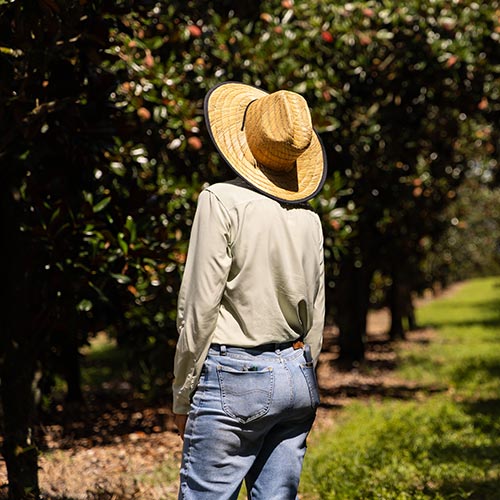
But, it’s more than a business to Julie and Matt. It’s their life’s mission. Matt, in particular, is the resident plant expert whose heart is as big as a live oak. He doesn’t just grow trees. He makes the Earth a more beautiful place to live, and he devotes an immense amount of time and resources to ensuring his legacy is one of true environmental stewardship through sustainability.
At the end of the day, Matt wants people to be able to appreciate nature with the same love and respect that he does, so that generations upon generations after him will protect our precious environment and share in its joy. It’s why Matt does what he does.
When he’s not elbow-deep in soil, Matt is the king of side quests. One of his passion projects: cultivating legacy trees.
What’s a Legacy Tree?
Simply put, a legacy tree is a tree with significant heritage. Maybe it’s historically significant. Maybe it’s the tree you grew up climbing in. Maybe it’s just a really old, really impressive tree. Whatever its special sauce, legacy trees are the ones that inspire us to think a little more outside of ourselves.
A Family Tree
Years ago, in Ponte Vedra, Magnolia Company founders Julie & Matt Roth took on a special kind of project: a family tree.
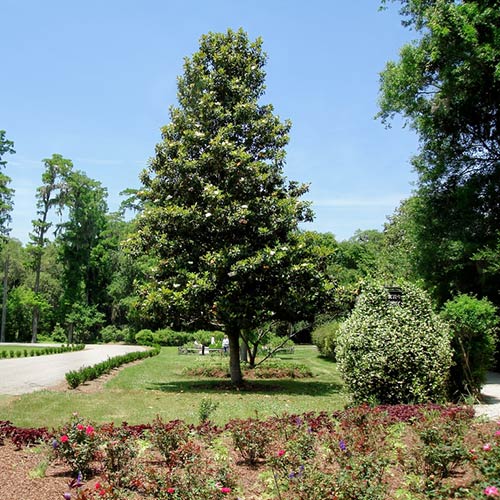
“There was this really beautiful magnolia tree. It’s so ginormous that it looks like it could be a live oak,” says Matt with marvel. Matt’s our resident magnolia expert, and this man knows trees like nobody else. When he’s impressed by a tree, it’s a tree worth remembering – definitely not your average magnolia. He’s looking to get a measurement on this particular giant to see if it might qualify as a champion tree in the state of Florida.
The tree in question belongs to a long time friend of the Roths. This family cherished their magnolia, with countless precious childhood memories made climbing in its sturdy branches. Magnolias are a particularly hardy kind of tree (it’s one of the many reasons Matt adores them so much), so it’s not at all uncommon for well-tended magnolias to thrive for decades upon decades.
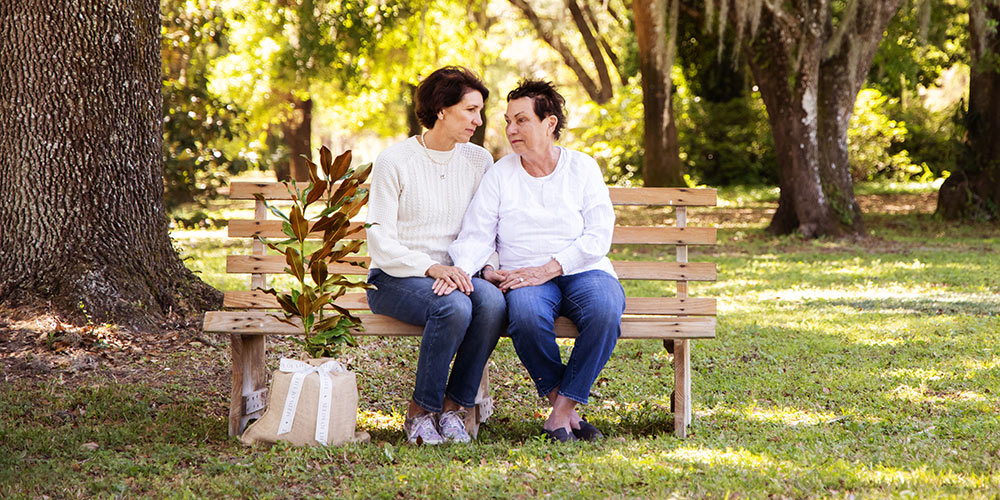
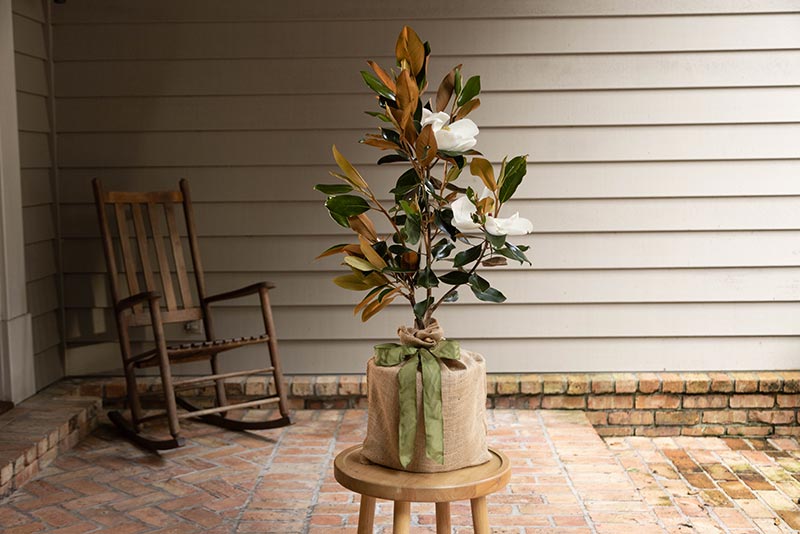
“They had all of these memories with the tree,” says Matt. The lady of the house, now a widow, is in her late 80s. As a favor to their dear friend, Matt and Julie wanted to give a one-of-a-kind gift to the family. They took cuttings from this incredible tree, and each cutting became its own tree with genetics identical to the family tree – a monument of both nature and a family legacy.
Mount Vernon & the George Washington Magnolias
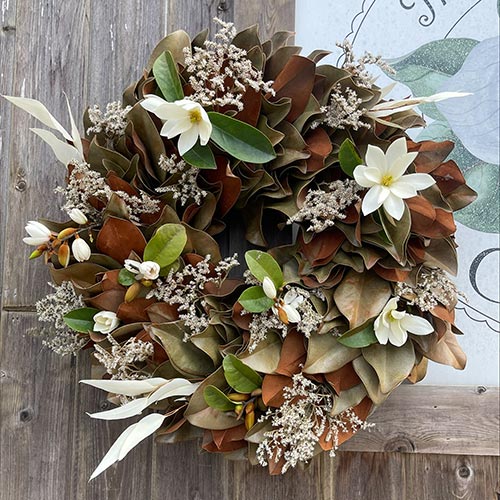
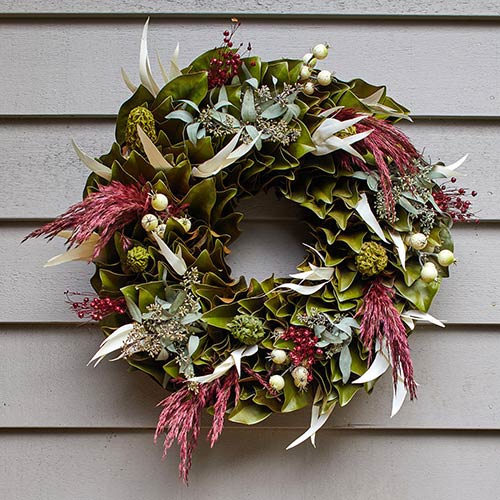
On the hilltops of Mount Vernon are a cluster of prized trees, kept in pristine shape for the sake of preserving history: the George Washington magnolias. Planted by Washington himself on the estate after the Revolutionary War, these trees are a unique bookmark in history. According to Matt, “They contacted us about making a wreath for a fundraiser. We felt honored, really.”
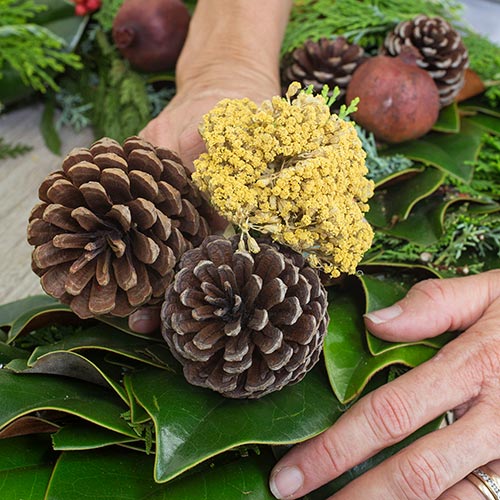
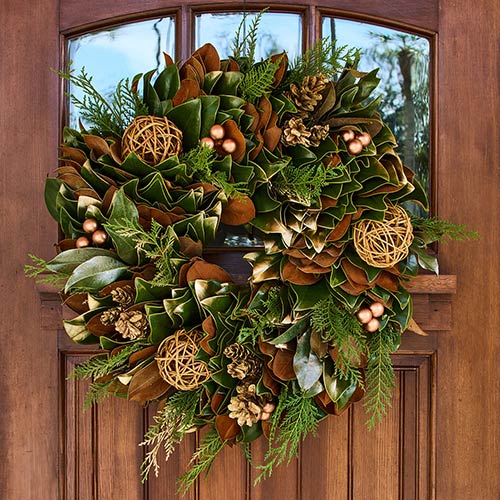
Mt. Vernon is a private organization, run entirely on donations. The wreath was a one of a kind creation, made exclusively from the foliage of these legacy magnolia trees on the estate. The Magnolia Company already specializes in hand-harvested and artisanal magnolia wreaths, so the design was nothing short of impeccable. Fresh leaves, no matter how carefully harvested, will eventually dry out. The wreath was woven in such a way that when the boughs dried and began to curl, it would be at its most beautiful.
The Colonial Williamsburg Project
Matt and The Magnolia Company have also been fortunate enough to collaborate with the Colonial Williamsburg living history project. With special permission, Matt was able to take cuttings from their oldest magnolias, which tower over the award-winning arboretum.
“Periodically, we propagate those cuttings and have direct clones from those historic trees.” Matt loves this process, because it skips the seed phase for expedited tree growth. What’s more, this allows growers like Matt to guarantee the genetics of his products because each propagation is genetically identical to the parent tree.
In short, this particular propagation project is a foolproof way to preserve a living piece of history through nature’s incredible design.
Sizing Up on the Farm
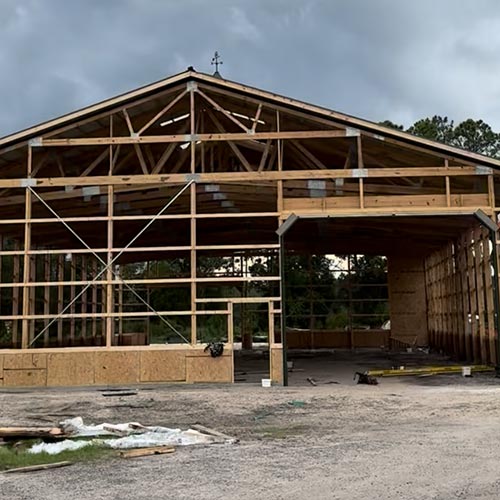
Down at the Railroad Nursery, a repurposed and newly renovated sawmill, Matt’s taken on a new project (one of a million, really): 7 and 15 gallon trees.
In the business, trees are sold according to the size of container they’re in. Until recently, 5 gallons were about as big as you got, with the occasional special commission for something larger.
Matt’s been taking propagation cuttings from his best and strongest cultivars and turning them into 7 and 15 gallon trees, which are enormous from the commercial standpoint. Each tree represents a legacy of farming lessons learned and nothing but the best genetics for a hardier, more luscious tree. It’s not just a tree. It’s a piece of The Magnolia Company legacy – and Matt’s legacy – that stands for two decades of growing as a farmer, a businessman, an environmental steward, a husband, and a father.
Q: What do you feel when you take on these projects?
A: “It’s really a fun thing! When you sit back and kind of reflect on it, you realize our role in service is to help transition generations. When you stop and think, ‘that was planted by George Washington’ or ‘that was such a special tree in my family,’ it’s really an honor to be able to be a part of these stories. At the end of the day, it’s really about strengthening our connections to people. It’s been quite rewarding to think that that tree’s holding a place in people’s minds and hearts, between that family and those connections of love.”
Q: Do you have any trees that tie a legacy to you personally?
A: “We have one tree that we planted with Julie’s grandmother at her parents’ house. I do reflect on that. That tree was basically planted and dedicated towards her grandmother. It’s a massive magnolia now. We also have a tree that our son, Will, planted at our house when he was 13 or 14 years old. Every time he’s over, he comments on how his tree is growing.
We’ve got another large magnolia that’s been in our family for some time. We had this incredible black lab that the kids grew up with. When he died, we buried him underneath that tree. The kids always comment to me how I need to take better care of that tree, you know with the tough winter we just had. I convinced them to let me keep caring for it. It just really holds a special place to all of us.
And of course, the farm really represents our family legacy. There’s just so much history there that predates even Julie and I. And for our kids, I know it holds a special place in their hearts too.”
Q: You and Julie are new grandparents now. What do you hope your grandbabies take away from the legacy of the farm?
A: “I hope that, at an early age, they have an appreciation and a wonder for nature. I know that if they have that, they’ll ask questions. When they get curious, they’ll learn about the trees and what they provide and the place that they share in our lives. If they have that, it’ll be something they want to curate themselves and protect what we have left.”